
A Security 8-Hour Class goes more smoothly when students arrive with the right documents, a realistic travel plan, and a few thoughtful examples from work. Preparation should support participation rather than encourage last-minute memorization. Radiant Training & Consulting, LLC offers annual security training in New York City, and students should follow the specific provider instructions for their session while checking official state sources for current course requirements.
Bring the Identification the Provider Specifies
Read the confirmation carefully and gather accepted identification before class day. Check that names are consistent with registration and prior training records. Do not assume a photo on your phone will replace an original document if the provider requires something else. Place the documents in a secure folder and return them to a safe location after use. If an item is missing, contact the provider early rather than arriving and hoping an exception will be made.
Security 8-Hour Class: Carry Prior Records Only When Relevant
If the provider asks for a previous certificate, registration detail, or employer form, bring a clear copy in the requested format. Keep unrelated sensitive documents at home. Review the course name and date on older records so you can describe your history accurately. When records conflict, label the issue for verification; do not alter a document or guess at a completion date. A short written timeline can help the provider understand the question.
Pack for Focus and Note-Taking
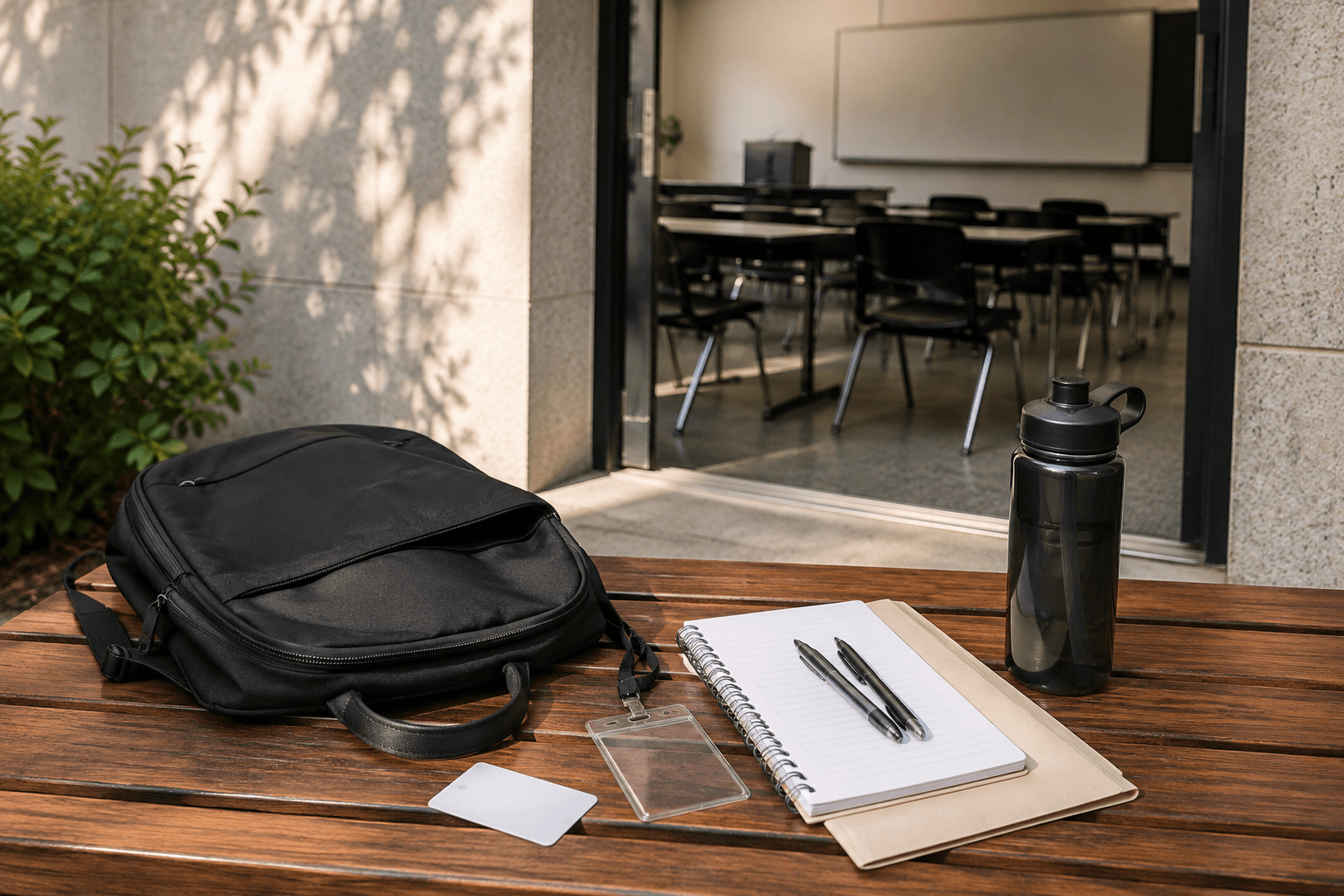
Bring a working pen, a notebook or permitted device, water if allowed, and any materials listed by the school. Choose a note format before class: one column for rules or concepts, one for examples, and one for follow-up questions. Avoid packing so many reference materials that you cannot find the current one. Official links saved on your device may be more useful than a stack of undated printouts.
Prepare Two Realistic Questions
Think about a situation from work that was difficult because of unclear communication, access exceptions, reporting, or escalation. Remove names and confidential site details. Turn it into a question about professional judgment, not a request to criticize an employer. A second question can focus on a topic that has become routine and deserves review. Prepared questions help experienced guards participate without dominating the session with unrelated stories.
Plan Travel, Food, and Rest
Confirm the address, room or check-in instructions, transit route, and arrival time. Build in a delay buffer. Arrange meals or snacks according to the class policy and manage medication or accessibility needs through appropriate advance communication. Adequate rest matters; attending immediately after an exhausting shift may reduce learning. If a schedule conflict develops, use the provider’s rescheduling process instead of arriving late without notice.
Leave With Records and a Follow-Up List
Before departing, understand how completion documentation will be provided and whom to contact if information is incorrect. Check your name and course details when the record becomes available. Write down one training topic to apply at work, one administrative task, and one official source to revisit. Store the certificate securely and submit it through any authorized employer or agency process. The class ends; recordkeeping and professional follow-through continue.
Put the Plan Into Practice
Before your next annual session, confirm the class-day checklist with Radiant Training & Consulting, LLC, follow the provider’s arrival instructions, and verify any regulatory question through the current New York State source.