
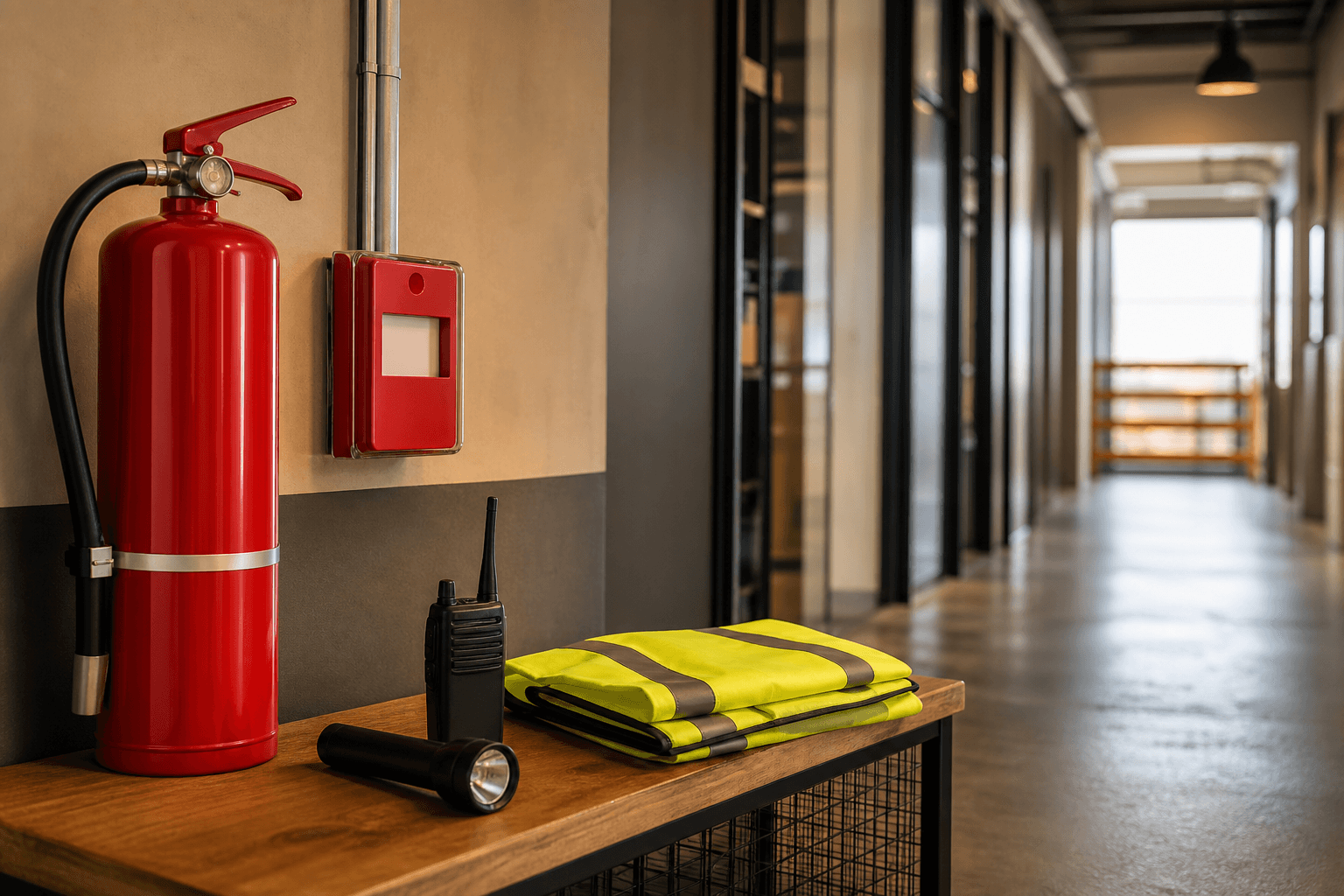
Fire guard training should help a learner connect observation, communication, prevention, and approved emergency procedures to the conditions encountered at an assigned location. Real-world readiness does not mean improvising beyond one’s authority. It means recognizing relevant information, following the site’s plan, and communicating accurately when conditions are changing.
Build Situational Awareness Through Deliberate Observation
Observation is more than looking around. A trained professional develops a repeatable scan: exits and paths of travel, work activities, temporary obstructions, unusual odors or sounds, changes in occupancy, equipment conditions, and anything else identified by the assignment or approved plan.
The scan should be documented or reported according to site procedure. Avoid turning an observation into a conclusion without evidence. “A box is blocking part of the corridor” is a fact; “the tenant does not care about safety” is an assumption and does not help resolve the condition.
Practice Fire Guard Training Communication Skills
Emergency messages should be brief, ordered, and factual. Practice identifying the location, observed condition, immediate approved action, people notified, and information still being confirmed. If a communication channel fails, use the backup method established by the site.
Speaking calmly is not the same as minimizing urgency. Use clear language and repeat critical information when required. Do not add dramatic speculation, and do not delay a required notification while trying to collect every possible detail.
Know the Assignment and Its Limits
Different locations and conditions can create different fire-guard responsibilities. Learners should understand the specific assignment, required certificate or qualification, post orders, patrol area, reporting chain, and emergency plan that apply. Course content provides a foundation, but the approved site documents direct site-specific actions.
When instructions conflict or a condition falls outside the assignment, escalate through the designated chain. Do not create a personal procedure during an emergency. Questions discovered during normal operations should be resolved before an incident whenever possible.
Recognize How Temporary Conditions Change Risk
Construction, maintenance, disabled systems, special events, deliveries, and unusual occupancy can change normal conditions. A fire guard should know what temporary condition led to the assignment and what safeguards or patrol expectations have been established by authorized parties.
Track the status of the condition only through approved sources. A verbal comment that “the system is probably fixed” is not the same as formal confirmation. Continue the assigned procedure until authorized instructions change.
Protect Means of Egress
Paths of travel and exits must remain usable according to applicable requirements and the site plan. Training should develop the habit of noticing obstructions, locked or impaired components, confusing storage, and temporary activities that affect movement.
A learner should also understand how to report and escalate a condition rather than attempting a correction that is unsafe or outside authority. Documentation should state what was observed, where, when, and what follow-up occurred.
Understand Alarm and Notification Responsibilities
Fire guards need a working understanding of how alarms or emergency notifications are initiated and communicated at the assigned site. Exact procedures vary, so training should emphasize verification of site instructions rather than memorizing one universal sequence.
Radiant Training & Consulting, LLC offers FDNY certificate-of-fitness preparation and specialty safety courses in New York City. Learners should use the materials and instructor guidance for their specific course and confirm the procedures that apply to their eventual assignment.
Conduct Patrols with a Consistent Method
A patrol should follow the route, frequency, checkpoints, and documentation method established for the assignment. Consistency makes it easier to recognize change. Rushing, skipping quiet areas, or completing records before the patrol undermines the purpose.
During training, practice a mental sequence: observe, compare with expected condition, take approved action, communicate, and document. The sequence encourages discipline without replacing the detailed instructions of the site.
Write Reports That Separate Facts from Interpretation
Useful reports identify date, time, location, people notified, observed facts, actions taken, and status at handoff. They avoid blame, unsupported causes, and emotional language. If a person’s statement matters, identify it as a statement rather than presenting it as personally observed fact.
Review reports for clarity. A reader who was not present should understand the sequence without guessing. Corrections should follow the employer’s recordkeeping procedure; records should never be altered to hide a mistake.
Coordinate Without Abandoning the Post
Emergency response may involve building staff, security teams, occupants, contractors, and public responders. Fire guards should know whom they support, what information they can provide, and how their own assignment continues during the response.
Do not leave an assigned area or take on a different role unless the approved procedure or authorized direction requires it. Coordination works when each person understands responsibilities and communicates changes.
Use Scenario Practice to Improve Decisions
Scenario practice can prepare learners for uncertainty without pretending that every emergency is predictable. A useful exercise states a few facts, asks what must be confirmed, and requires the learner to identify the relevant procedure and communication step.
Examples might involve an obstructed route, an unusual odor, a report from another floor, an unavailable radio, or a temporary system condition. After each scenario, compare the answer with the approved material and correct any invented step.
Stay Professional with Occupants and the Public
People may be confused, impatient, or frightened. Give only instructions authorized by the plan or responsible leadership, using plain language and a respectful tone. Avoid arguments and do not share confidential operational details.
When a person needs assistance beyond your role, notify the appropriate party. Professional conduct includes knowing when to seek help and documenting the interaction when required.
Prepare for Outdoor and Environmental Conditions
Some assignments may involve entrances, yards, temporary structures, or construction areas. Weather, lighting, noise, and vehicle movement can affect observation and communication. Follow approved safety requirements and use assigned equipment properly.
Fatigue also affects awareness. Arrive rested, take authorized breaks, stay hydrated when appropriate, and report a condition that prevents safe performance. Never conceal impairment to remain on an assignment.
Maintain Readiness Between Incidents
Most shifts do not involve a major emergency, which makes routine discipline essential. Review contact methods, verify assigned equipment according to procedure, keep records current, and pay attention to changes that might otherwise become normal through familiarity.
Use quiet periods for approved review, not for creating distractions. A professional remains ready without exaggerating ordinary conditions or becoming complacent.
Continue Learning After the Course
Keep course notes and approved job materials organized. Participate seriously in drills and refresher training, ask questions when procedures change, and review errors as opportunities to improve the system. Do not rely on an old class note when current site instructions or official guidance has changed.
Readiness grows through repeated, accurate practice. Observation, reporting, communication, and procedural discipline are skills that become stronger when they are used consistently during normal operations.
Practice Shift Handoffs as a Safety Skill
A strong handoff gives the incoming person an accurate picture of current conditions without forcing them to reconstruct the shift from scattered notes. Follow the site’s approved format and identify unresolved conditions, temporary safeguards, relevant notifications, equipment status, patrol information, and any instruction that remains active.
Do not rely on memory for a significant open item. Document it through the authorized system and confirm that the receiving person understands what needs continued attention. A handoff should distinguish direct observations from information reported by someone else, and it should never omit an issue merely because it is uncomfortable to explain.
Learn from Drills Without Treating Them as Performances
Drills create a controlled opportunity to test communication, movement, role clarity, and documentation. Participate according to the stated objectives and resist the urge to create an unplanned complication. The value comes from observing how the approved process works under realistic timing.
Afterward, record factual observations: where a message was delayed, which instruction was unclear, or what resource was difficult to locate. Discuss improvements through the established review process. A drill finding should lead to an assigned corrective action when responsible leadership determines that a change is needed.
Conduct a Disciplined After-Action Review
Following an incident or significant condition, separate immediate reporting from later analysis. First complete the required notifications and records. During a later authorized review, ask what was expected, what actually occurred, why the difference mattered, and what action should prevent recurrence.
Avoid blame-based conclusions and unsupported causes. Include the people who understand the relevant work, protect confidential information, and assign follow-up with a due date. The purpose is to strengthen the system while preserving an accurate record of the event.
To prepare for a fire-guard or related certificate-of-fitness path, review current course options with Radiant Training & Consulting, LLC and confirm the intended certificate, prerequisites, schedule, and materials before enrolling.